

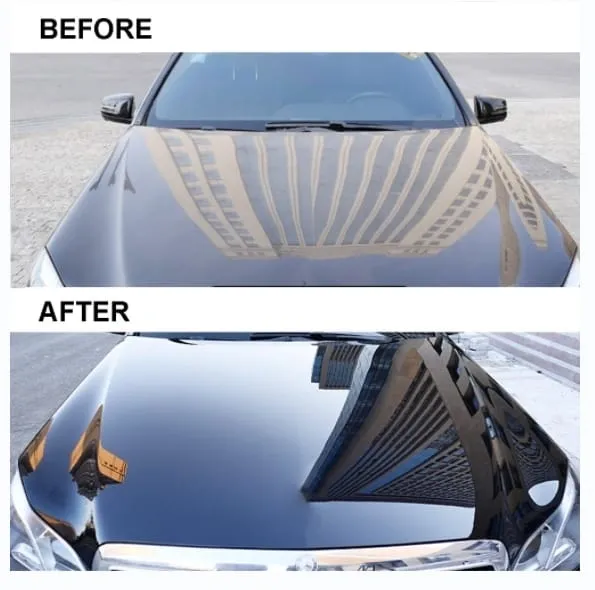
If you love your car, you probably want to keep it looking shiny and new for as long as possible. But no matter how careful you are, your car’s paint is constantly exposed to various threats, such as scratches, chips, UV rays, chemicals, bird droppings, and more. These can damage the paint and make it look dull, faded, or even corroded over time.
That’s where ceramic coatings come in. Ceramic coatings are a type of paint protection that can shield your car’s surface from these harmful elements and enhance its appearance. But what exactly are ceramic coatings, and how do they work? In this blog post, we will explain what ceramic coatings are, how they are applied, and what benefits they offer for your car. We will also compare them with other types of paint protection, such as waxes and sealants, and help you decide which option is best for your car.
What are Ceramic Coatings?
A ceramic coating is a liquid polymer that is applied to the exterior of your car. It forms a chemical bond with the factory paint, creating a thin, hard, and transparent layer on top of the clear coat. This layer acts as a protective shield that repels water, dirt, and other contaminants, and prevents them from sticking to the paint.
Ceramic coatings are mainly composed of silicon dioxide (SiO2), which is derived from natural materials such as quartz and sand. SiO2 is a very durable and resistant substance that can withstand high temperatures, UV rays, and chemical reactions. Some ceramic coatings also contain other ingredients, such as titanium dioxide (TiO2), to enhance their performance and longevity.
Ceramic coatings are not a new invention. They have been used for decades in various industries, such as aerospace, marine, and industrial, to protect metal surfaces from corrosion and wear. However, they have only become popular in the automotive industry in recent years, thanks to the development of more advanced and accessible products.
How are Ceramic Coatings Applied?
Ceramic coatings can be applied by professionals or by yourself, depending on the type and quality of the product. Professional-grade ceramic coatings are usually very concentrated and require special equipment and skills to apply. They also need to be cured under controlled conditions, such as heat lamps or infrared lights, to ensure proper adhesion and performance. Professional-grade ceramic coatings can last for several years, or even for the lifetime of the car, depending on the maintenance and care.
DIY-grade ceramic coatings are usually less concentrated and easier to apply. They can be applied by hand or by using a spray bottle, following the instructions provided by the manufacturer. They also cure faster and do not need any special equipment or conditions. However, DIY-grade ceramic coatings are less durable and effective than professional-grade ones, and they need to be reapplied more frequently, usually every few months or years.
Regardless of the type of ceramic coating, the application process involves several steps. First, the car needs to be thoroughly washed and dried, to remove any dirt, dust, or grease from the surface. Second, the car needs to be decontaminated, to remove any embedded contaminants, such as iron particles, tar, or sap, from the paint. This can be done by using a clay bar, a chemical decontaminant, or both. Third, the car needs to be polished, to remove any swirl marks, scratches, or defects from the paint. This can be done by using a machine polisher or by hand, depending on the condition of the paint. Fourth, the car needs to be wiped with an alcohol-based cleaner, to remove any oils or residues from the polishing process. Finally, the ceramic coating can be applied, following the directions of the product. The coating needs to be spread evenly and thinly over the surface, and then buffed off with a microfiber cloth. The coating also needs to be cured for a certain period of time, depending on the product, before it can be exposed to water or other elements.
What are the Benefits of Ceramic Coatings?
Ceramic coatings offer many benefits for your car, such as:
- Protection: Ceramic coatings can protect your car’s paint from various threats, such as scratches, chips, UV rays, chemicals, bird droppings, and more. They can also prevent oxidation, fading, and corrosion of the paint, and make it easier to clean and maintain.
- Durability: Ceramic coatings can last for a long time, depending on the type and quality of the product, and the maintenance and care of the car. Professional-grade ceramic coatings can last for several years, or even for the lifetime of the car, while DIY-grade ceramic coatings can last for a few months or years. Ceramic coatings are also more resistant to washing and abrasion than waxes and sealants, which means they do not need to be reapplied as often.
- Aesthetics: Ceramic coatings can enhance the appearance of your car, by adding a glossy and smooth finish to the paint. They can also make the paint more vibrant and rich, by enhancing the depth and clarity of the colour. Ceramic coatings can also hide minor imperfections and swirl marks on the paint, and make it look more uniform and consistent.
I hope this introduction helps you understand what ceramic coatings are and why they are beneficial for your car. In the next section, we will compare ceramic coatings with other types of paint protection, such as waxes and sealants, and help you decide which option is best for your car. Stay tuned! 😊