Demand Underpins Blackheath’s Industrial Rental Market
Sustained Demand Underpins Blackheath’s Industrial Rental Market
Sustained demand continues to bolster the industrial rental market in Cape Town’s Blackheath node. This is driven primarily by occupiers whose location decisions are tied to operational necessity, including access to transport routes, workforce availability and day-to-day efficiency; factors that have kept vacancies consistently low and competition for well-located facilities high.
Situated along the city’s eastern industrial corridor, Blackheath functions as a mid-market industrial hub supporting manufacturing, warehousing, light logistics and service-based businesses. While Blackheath has been established as an industrial precinct for decades, occupier interest has accelerated noticeably over the past five to seven years as infrastructure upgrades, improved connectivity and the availability of modern space have aligned with tenant requirements. Current leasing activity in the area reflects practical operating requirements rather than discretionary expansion, with tenants prioritising reliability of access, manageable commuting distances and functional, fit-for-purpose premises.
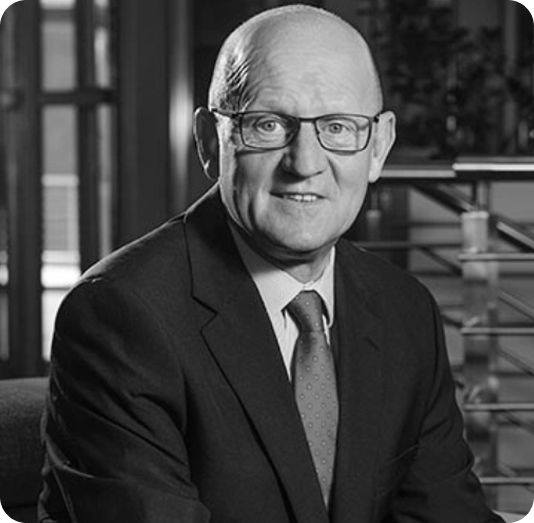
“Blackheath works because it supports how businesses actually operate,” said James Bylos, Head of Leasing at Spear REIT. “Occupiers focus on how easily staff and goods can reach a site, how consistent travel times are, and whether the location supports ongoing operations rather than short-term convenience.”
Transport upgrades across Cape Town’s eastern corridor have improved connectivity between industrial areas and surrounding residential catchments. Projects such as the dualling and intersection upgrades along Baden Powell Drive (R310) have increased capacity and eased congestion at key junctions, contributing to more predictable freight movement and commuter travel times. For occupiers operating shift-based workforces or time-sensitive distribution models, this predictability reduces operational disruption and associated costs.
“Infrastructure investment matters when it improves reliability,” Bylos said. “For industrial users, predictability is often more important than absolute distance.”
Blackheath’s access to the N1, N2 and R300 provides multiple route options across the city and links the node to Cape Town International Airport without dependence on a single corridor. This connectivity supports a broad tenant base and allows businesses to adjust distribution patterns as volumes or markets shift. From an investment perspective, this flexibility limits exposure to congestion-related disruption and supports consistent leasing interest across economic cycles.
Employee accessibility remains a key contributor to demand in Blackheath, with a strong employee base drawn from nearby areas such as Kuils River, Blue Downs and the wider eastern suburbs. Manageable commuting distances and travel patterns that run against peak-hour flows into the CBD shorten travel time for many employees, while rail, bus and taxi services further support accessibility.
“Employee accessibility has a direct impact on tenant behaviour,” Bylos said. “When people can reach a site consistently and predictably, businesses are more inclined to commit to longer lease terms and invest in their premises.”
Economic profiling of the wider Blackheath/Kuils River industrial area shows sustained development and steady industrial land take-up over the past decade, supported by ongoing transactional activity. While vacancy levels in the area increased between 2012 and 2022, more recent market commentary indicates tightening conditions across Cape Town’s industrial sector, particularly in established areas with proven access and labour advantages.
For investors and tenants, Blackheath’s appeal lies in not only the industrial product diversity but also in the numerous arterial upgrades concluded to make access and egress to this growing node more attractive resulting in increased tenant demand and investment interest. Demand is anchored by occupiers whose location requirements are linked to operating efficiency and labour access, providing a degree of resilience during cyclical slowdowns. Properties that offer appropriate yard space, circulation, power capacity and security continue to draw interest from tenants seeking functional, long-term bases.
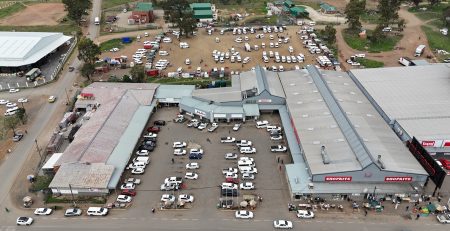
Spear REIT’s continued industrial investment in the area, including redevelopment activity aligned with secured long-term leases, reflects this focus. The company has recently received plan approval to commence the extension of Bravo Park, Blackheath, which will include the development of a new 7 008m² modern logistics warehouse designed to meet contemporary distribution and warehousing requirements. Spear will invest over R86 million in this project, making use of available development rights and land within its existing portfolio. Its capital spend is focused on enhancements that respond directly to how tenants operate, highlighting the importance of well-kept, fit-for-purpose operational spaces in maintaining high occupancy rates.
Looking ahead, Blackheath is expected to remain a demand-led industrial hub, supported by incremental infrastructure improvements, continued residential growth in the eastern corridor and sustained occupier demand for well-located, functional industrial space.
“Blackheath is not driven by hype,” Bylos said. “It is a core industrial zone built around fundamentals, and those fundamentals continue to support consistent leasing demand.”